

- January 17, 2026
- Posted by: itmanager
- Category: Education, Innovation, Latest News, Tertiary Education
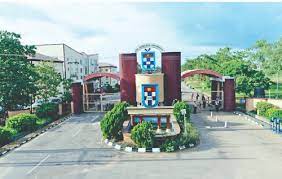
Afe Babalola University, Ado-Ekiti (ABUAD), has launched a unified Innovation Hub framework to consolidate its innovation initiatives and accelerate the commercialisation of research outputs and creative solutions.
The development followed the inaugural ABUAD Innovation Hub Meeting held on Saturday, January 17, 2026, under the leadership of the Vice-Chancellor, Prof. E. Smaranda Olarinde, FCArb, FCAI.
The meeting, coordinated through the Directorate of Information and Communication Technology (ICT) under the oversight of Prof. Bayo Ogundipe, brought together innovation leads across the institution to align strategies and create a coordinated pathway for translating research and ideas into market-ready products and services.
Speaking at the meeting, Prof. Olarinde described innovation as a strategic priority for sustaining ABUAD’s leadership in higher education and enhancing its competitiveness in global university rankings.
“A unified Innovation Hub would strengthen research impact, expand student participation in innovation, and support the development of scalable solutions with socio-economic relevance,” the VC added.
Prof. Ogundipe in his reaction revealed that although the university had recorded notable innovation successes in areas such as agriculture, engineering, and the creative industries, many initiatives had operated independently.
According to him, the Innovation Hub framework is designed to eliminate fragmented efforts by connecting research, creativity, and student talent within a single ecosystem focused on commercial viability and measurable impact.
Presentations at the meeting highlighted ongoing projects and commercialisation prospects including: the Provost, Post Graduate Studies, Prof. Abiodun Ojo, showcased the university’s Agritech Programme, anchored by the annual Afe Babalola Agricultural Exposition, alongside UN-supported youth-focused agricultural entrepreneurship training and plans to commercialise agricultural outputs.
Dr. Temitayo Ejidokun outlined the activities of ASVA Associates, which supports student creativity and innovation through initiatives such as the ASVA Developer and Innovators Conference, artificial intelligence training in collaboration with Nvidia, and the Engineering Innovation Competition.
From the College of Engineering, Prof. Femi Onibonoje showcased engineering-led innovations targeted for commercialisation, including modular solar photovoltaic systems, autonomous transit robots, and electric vehicle development.
Prof. Ademola Azeez introduced the ABUAD Castle Initiative, a venture-backed incubation model designed to integrate entrepreneurship into the curriculum and link students with alumni mentors to build globally competitive startups.
Also presented was the OGEES Sustainable Innovation Hub, a virtual platform connecting research to sustainability solutions through innovation dialogues, policy briefs, and capacity-building programmes.
In addition, Prof. Olaposi Omotuyi and Dr. Oluwole Akawa presented proposals to explore marine bioresources for anti-cancer drug development, reflecting the university’s growing interest in aquatic and blue economy research.
Participants identified sustained funding as critical to moving innovations from concept to prototype and market deployment. Olarinde reaffirmed the university’s commitment to supporting viable innovation projects with clear commercialisation pathways and measurable impact.
The meeting concluded with an agreement to establish a coordinated Innovation Hub structure to support students, researchers, and innovators from ideation through product launch, positioning ABUAD for a stronger role in Nigeria’s innovation and startup ecosystem.